












 News
News 
-
Contact Us
-
Phone number:18914229323
E-Mail:huichangwen@126.com

Category:answer Publishing time:2026-08-24 14:03:10 Browse: Times
Understanding Sheet Metal Production
Sheet metal production is a fundamental manufacturing process that transforms flat metal sheets into a vast array of products used across virtually every industry. From automotive body panels and aerospace components to household appliances and construction materials, sheet metal forms the backbone of modern manufacturing.
Sheet metal refers to metal formed by industrial rolling into thin, flat pieces, generally measuring between 0.5 mm and 6 mm thick—thinner pieces are classified as foil, and thicker pieces as plate-3. The sheet metal production process encompasses a range of techniques including cutting, bending, stamping, and forming, each requiring specialized equipment and expertise.
The Sheet Metal Production Process
The sheet metal production process involves several key stages that transform raw material into finished components. According to academic research, the manufacturing process planning for discreet sheet metal parts includes: 2D flat blank development from 3D CAD models, shearing of 2D flat blanks from bulk stock, identification of machining and forming features, evaluation of optimum bending sequences, and identification of resources for forming individual features-5.
Material Selection
The choice of material is the first critical decision in sheet metal production. Common sheet metal materials include:
Stainless steel: Available in standard (300 series, non-magnetic) and spring-like (301, 17-4) grades. Grade 316 offers the highest corrosion resistance, while Grade 304 provides good formability and weldability-9.
Cold rolled steel (CRS): Provides a smooth finish and tighter tolerances compared to hot rolled steel-9.
Aluminum: Lightweight, strong, and corrosion-resistant, increasingly used in electric vehicle applications-11.
Copper and brass: Chosen for specialized applications where conductivity or aesthetics matter-9.
Steel accounted for approximately 74.82% of the sheet metal market in 2025, confirming its dominance in the industry-11. However, aluminum is forecast to expand at an 8.33% CAGR through 2031, driven by demand for lightweighting in automotive applications including EV doors, hoods, and battery floor structures-11.
Cutting Operations
Cutting is the first major step in the sheet metal production process. Modern fabrication employs several cutting techniques:
Laser cutting is widely used for its precision and speed. In a typical production line, laser cutting is performed according to decomposed forming files, enabling accurate processing of complex geometries-1.
CNC punching and cutting machines provide automated, fast, and accurate results for creating templates from flat metal sheets-12.
Advanced production lines now incorporate automated loading and unloading systems with gantry trusses, suction cup components, and fork tooth assemblies to handle materials efficiently-6.
Forming and Bending Operations
After cutting, sheet metal undergoes forming operations that involve plastic deformation to achieve the desired shape. Press working operations are categorized into two main types: cutting operations (shearing, blanking, perforating) and forming operations (bending, deep drawing, hemming, corrugating)-4.
Bending is typically carried out on press brakes and panel benders, which can be hand-operated, automated, or robotic-12. The bending process follows bending diagrams created during the design phase, ensuring each part meets specifications-1.
Sheet metal fabrication is most economical when it uses configurations of "universal" tools rather than part-specific tooling. Designers must consider that because bends stretch the metal, features must stand away from bends to avoid distortion—a useful convention is 4T, or four times the material thickness-9.
Grooving and Preparation
An important preparatory step in some production processes involves sheet metal grooving. The sheet to be grooved is placed on a sheet metal grooving machine for positioning, with the thickness of the sheet input for automatic tool setting. Parameters such as grooving depth, residual thickness, and grooving angle are set according to requirements-1.
Finishing and Assembly
The final stages of sheet metal production include:
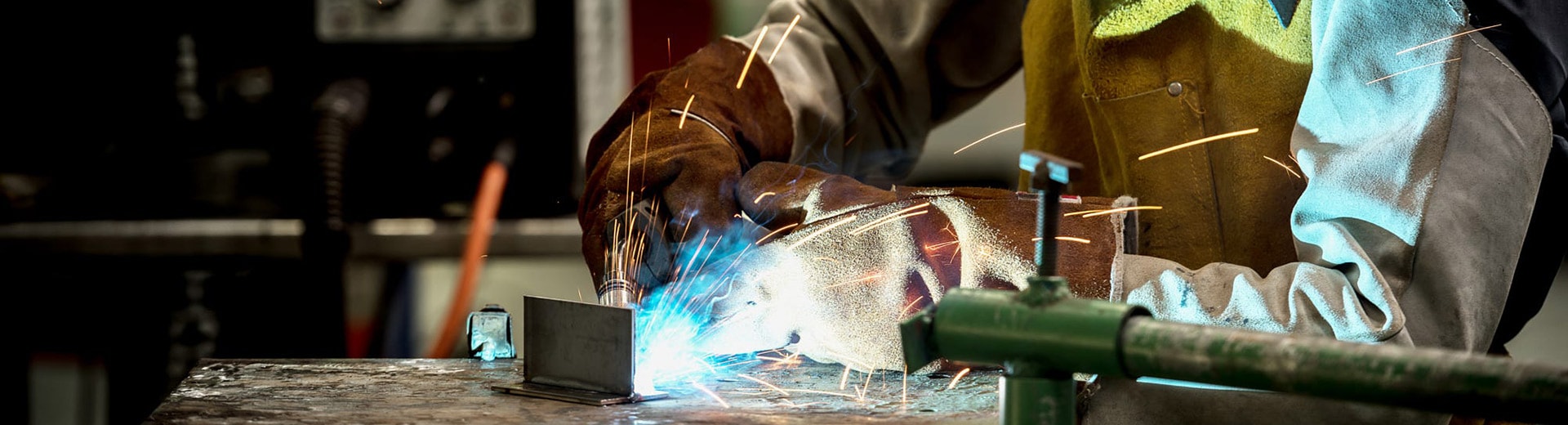
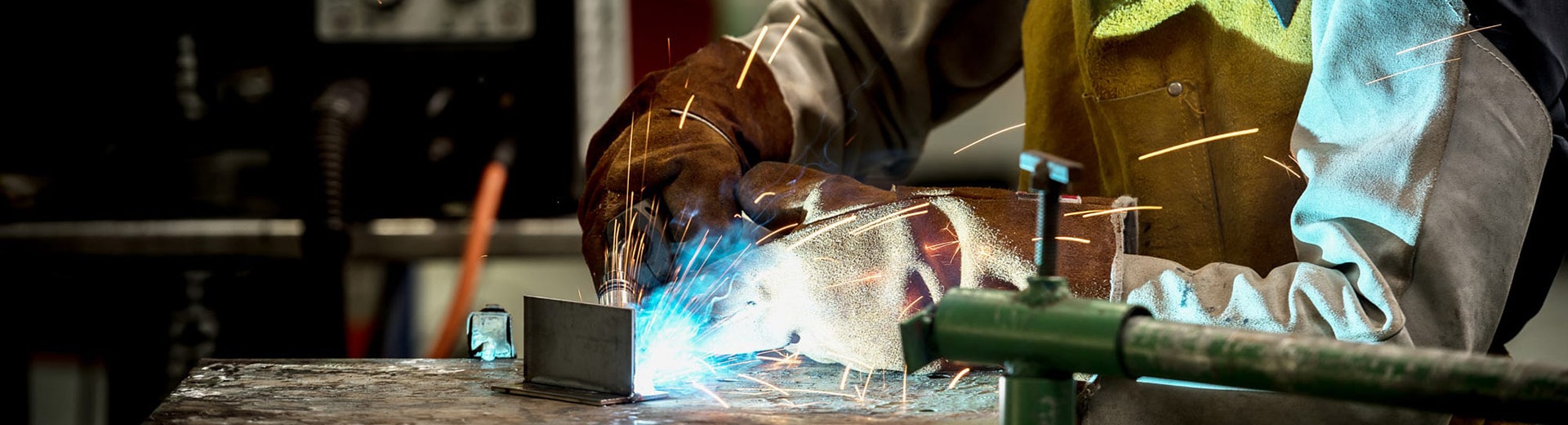
Welding: Joining metal components to create assemblies
Finishing: Linishing, bead blasting, polishing, priming, and powder coating
Assembly: Component assembly to create structures ranging from simple boxes to complex electro-mechanical assemblies incorporating hundreds of components-12
Sheet Metal Production Lines
A sheet metal production line represents an integrated system of machinery designed to process metal coils or sheets into finished products efficiently. Modern production lines incorporate advanced automation, material handling, and quality control systems.
Coil Processing Lines
Coil processing is a critical component of sheet metal production. Leading manufacturers offer specialized lines for processing various materials with precise specifications.
Slitting lines transform wide coils into narrower strips. Modern slitting lines handle widths up to 2100 mm, thicknesses from 0.10 to 10 mm, and operate at speeds up to 600 m/min. These systems can process carbon steel, stainless steel, tinplate, aluminum, and nonferrous metals with configurations including high-precision shears and quick-change systems for cutting tools-2.
Leveling and cut-to-length lines process materials up to 2100 mm in width. For thinner gauges, systems can achieve capacities of up to 150 sheets per minute. Features include straighteners, levelers, various shear types (rotary, flying, drum), and multiple stacking systems (mechanical with air cushion, magnetic, or vacuum). Trimming units, paper rewinders, and dimensional control systems ensure consistent quality-2-10.
Flexible Production Lines
Recent innovations have introduced flexible sheet metal processing production lines centered around automated storage systems. These modern lines integrate:
Automated Storage and Retrieval Systems manage material inventory, with MES systems updating storage location information and coordinating outbound operations-6.
Laser cutting units with one-to-two working modes allow two laser cutting hosts to share a single automatic feeding and unloading system. Gantry robots transfer materials from storage to the cutting machines, while unloading systems convey cut workpieces to manual sorting areas-6.
Integrated bending units combine manual and automated operations. For small batch production with significant shape variation, manual servo bending machines are used, with AGV trolleys transporting materials between storage and workstations-6.
Specialty Production Lines
Different industries require specialized sheet metal production lines:
Automotive lines are specifically designed to meet surface quality requirements and tight tolerances, processing thicknesses from 0.3 to 3.5 mm for both steel and aluminum, including high-strength grades-10.
High-strength steel lines handle hot-rolled HSS and UHSS steels up to 1600 N/mm² yield strength. These machines provide perfect leveling quality for laser cutting applications in structural engineering, crane construction, and wind turbine manufacturing-10.
Tinplate and pre-painted metal sheet lines are designed for sheets with very strict geometric tolerances, offering maximum productivity without affecting surface quality-10.
The Sheet Metal Market and Industry Landscape
The sheet metal industry is substantial and growing. World crude steel production reached 1,849.4 million tons in 2025-11. Asia-Pacific accounted for 48.63% of global revenue in 2025 and is projected to grow at a 7.84% CAGR through 2031, making it the largest and fastest-growing region-11.
Major Players
The sheet metal market is fragmented, with competition varying depending on a company's position in the value chain. At the raw material level, large steelmakers such as ArcelorMittal, China Baowu, Nippon Steel, and POSCO hold significant flat-rolled product capacity-3-7.
At the fabrication level, the market is more dispersed, with regional service centers, contract fabricators, and job shops serving local and specialized demand. This creates a market where scale matters upstream, but operational differentiation matters downstream-3.
Regional Dynamics
China remains central due to its flat-steel output and breadth of downstream fabrication. India is a key growth market, with new steel capacity, automotive production, electronics manufacturing, and infrastructure investment all expanding simultaneously-11.
North America operates under different conditions, where trade protection has supported domestic mills while also keeping input costs challenging for some fabricators-11. Europe faces structural challenges, as carbon regulations and energy costs influence production economics-11.
Design Considerations for Sheet Metal Production
Successful sheet metal production requires careful consideration of design principles:
Tolerances: Sheet metal tolerances are more generous than machining or 3D printing tolerances. Factors affecting tolerances include material thickness, machines used, and number of steps in production-9.
Bend Radius: A uniform bend radius (industry standard is 0.030 in.) should be used across a single part to reduce machine setups and accelerate production-9.
Feature Placement: Features must maintain a standard distance of four times the material thickness from bend to edge to avoid distortion and eliminate excess material removal-9.
Complexity Management: If a single part becomes too complex, consider welding or riveting together parts that can be made using universal tools-9.
Emerging Trends in Sheet Metal Production
Lightweighting and Electric Vehicles
The shift toward electric vehicles is driving demand for aluminum sheet and high-strength steel. Aluminum is forecast to expand at an 8.33% CAGR through 2031, with growth strongest in EV doors, hoods, and battery floor structures where mass reduction supports energy efficiency-11.
Sustainability and Decarbonization
Green steel production is gaining momentum. The EU has approved funding for ArcelorMittal and Thyssenkrupp steel decarbonization projects, supporting both companies' transition toward direct reduced iron and electric arc furnace-based flat steel production-3.
Digitalization and Smart Manufacturing
Sheet metal production lines are increasingly embracing Industry 4.0 technologies. Germany's sheet metal sector integrates data analytics and IoT to optimize manufacturing operations and improve product quality-7. Digital quality systems and advanced rolling capabilities are becoming competitive differentiators.
Automation and Robotics
The adoption of advanced machinery and robotics has led to automation within the sheet metal industry, resulting in increased production efficiency and reduced labor costs-7. Automated storage and retrieval systems, robotic material handling, and integrated production lines are becoming standard in modern facilities.


